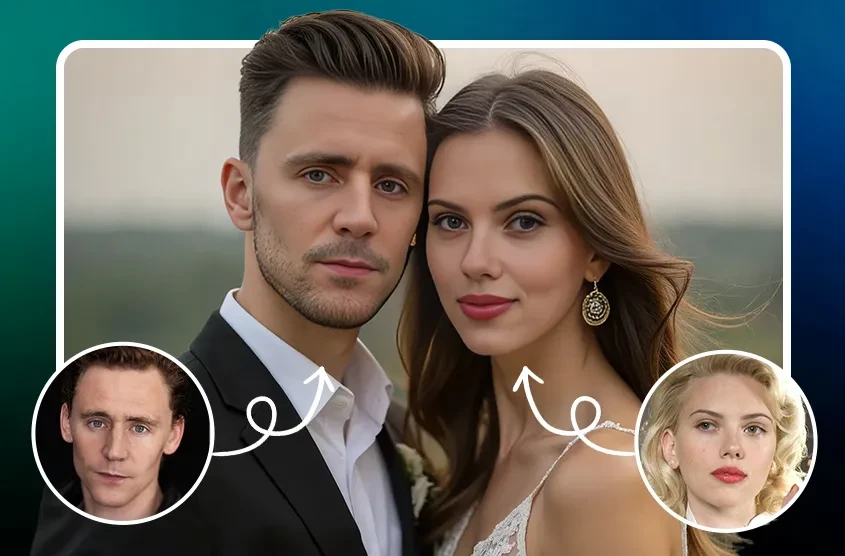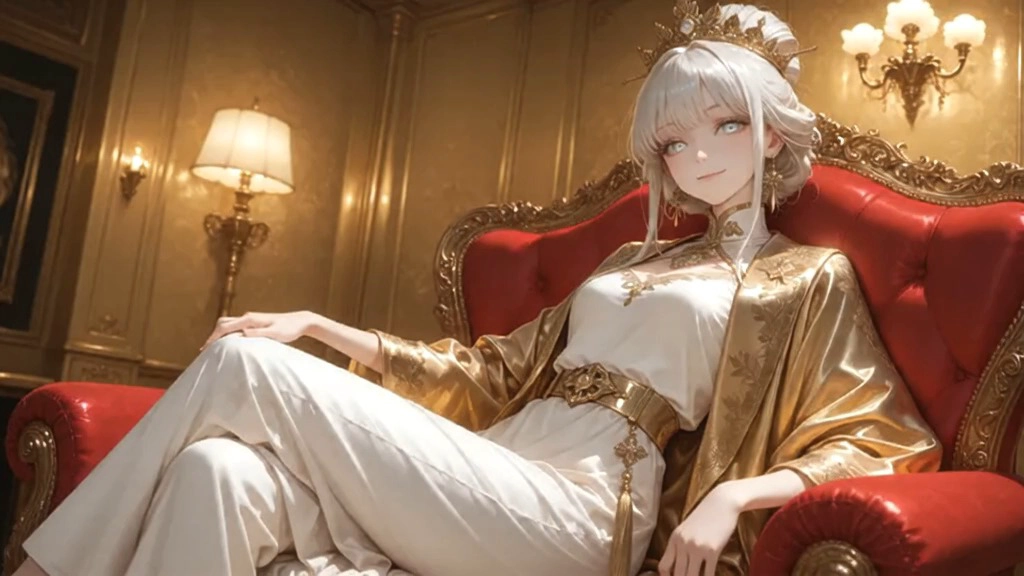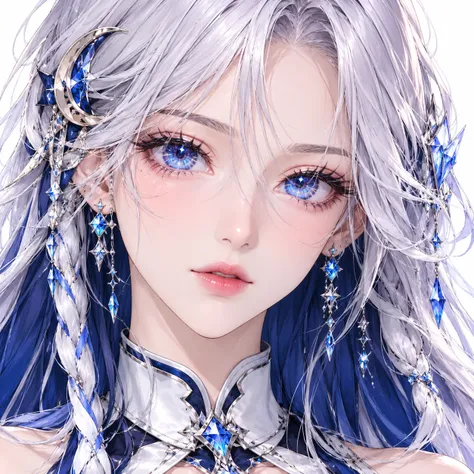
Seedream 4.5 Review: The New Heavyweight Champion of Consistency?
In the relentless arms race of generative AI, we have seen incumbents like Midjourney and Stable Diffusion trade blows for years. Just when we thought the hierarchy was settled, a new challenger stepped into the ring from the East. Seedream 4.5, developed by technology giant ByteDance (the parent company of TikTok), has arrived with a clear mission: to solve the "consistency problem" that has plagued AI artists since day one.
I have spent the last week putting Seedream 4.5 through its paces—pushing it to its breaking point, comparing it against the market leaders, and trying to figure out if it is just another hyped release or a genuine game-changer. Spoiler alert: if you are a storyteller or a brand designer, you need to pay attention.
This is my deep-dive review of Seedream 4.5.
The Promise: Why Seedream 4.5 Exists
To understand Seedream 4.5, you have to look at what it isn't. It isn't trying to be the "trippiest" AI. It isn't trying to be the most "open-source" (like Flux). Ideally, it positions itself as the "Production-Ready" AI.
The marketing materials make bold claims about "zero-shot character consistency" and "perfect text rendering." We have heard these promises before. DALL-E 3 promised text, and while it was better, it still felt like a sticker slapped on a drawing. Midjourney promised photorealism, and while it delivered, it often felt too "perfect"—like a wax museum. Seedream 4.5 claims to bridge the gap: photo-realism that feels grounded, with the utility of a graphic design tool.
Feature Breakdown & Performance
1. Image Quality: The "Cinematic" Bias
The first thing you notice when generating with Seedream 4.5 is the lighting.
Most AI models have a default "look." Midjourney tends towards high-contrast, dramatic, "artstation" lighting. Stable Diffusion (without fine-tunes) can look a bit flat.
Seedream 4.5 defaults to what I call "Netflix Cinematography." It loves volumetric fog, soft diffused skylight, and rim lighting that feels physically accurate.
- The Good: Skin textures are phenomenal. It avoids the "plastic skin" syndrome better than almost anything else I have tested. Subsurface scattering (the way light goes through ears or fingers) is handled natively.
- The Bad: It can sometimes be too cinematic. If you ask for a simple "passport photo," it might still give you a dramatic shadow over one eye. You have to fight the model slightly to get flat, boring lighting.
2. Character Consistency: The Killer Feature
This is the headline act. And frankly, it lives up to the hype.
In my testing, I generated a character—"Elias, a weathered mechanic with a grease-stained jumpsuit." I then threw Elias into ten different scenarios: eating a burger, riding a horse, sleeping in a spaceship, fighting a dragon.
- The Result: It was undeniably Elias in every shot. The mole on his cheek stayed. The specific way his hair fell stayed. The color of his jumpsuit didn't drift from "navy blue" to "bright blue."
- Why this matters: For comic book creators and storyboard artists, this is the holy grail. Previous workflows required complex training (LoRAs) or frustrating "inpainting" sessions. Seedream 4.5 just gets it from the context. It seems to build an internal 3D representation of the character and rotates it into the new scene.
3. Text Rendering: Finally Usable?
I tested this with typical problematic prompts:
- "A neon sign that says 'The Rusty Spoon'" -> Success 9/10 times.
- "A handwritten letter saying 'I will return at dawn'" -> Success 7/10 times.
- "A complex menu with small pricing" -> Failure (Gibberish).
It is not a magic wand. It cannot typeset a whole page of a book. But for headers, logos, and t-shirt designs, it is reliable enough to be used in a professional mock-up. It beats Midjourney v6 in legibility, although Midjourney v6 has nicer "typography design" (the font choice looks better in MJ, but the spelling is better in Seedream).
4. Multi-Reference Compositing
Comparison tests showed that Seedream handles "reference blending" better than the competition. I fed it a "style reference" of a Van Gogh painting and a "structure reference" of a modern skyscraper.
The result wasn't just a skyscraper with a swirl filter. It actually re-imagined the architecture as if Van Gogh painted it. The strokes followed the geometry of the building. This shows a deep "conceptual understanding" rather than just a pixel-level style transfer.
The Comparison: Seedream 4.5 vs. The Titans
No review is complete without a head-to-head.
Aesthetics: Midjourney usage results in more "beautiful" images by default. If you type "a cat," MJ gives you a masterpiece. Seedream gives you a photo of a cat. Winner: Midjourney (for Art), Seedream (for Realism).Prompt Adherence: If I say "A cat sitting ON a dog," MJ often just puts them side-by-side. Seedream respects the preposition "ON." Use Seedream if the layout matters. Winner: Seedream. Workflow: Midjourney is still stuck in Discord (mostly). Seedream's API-first nature means it integrates into better tools. Winner: Seedream. Speed: Flux is faster. Seedream takes a solid 20-30 seconds for 4K.License: Flux offers open weights (for the Dev/Schnell versions). Seedream is a proprietary "black box" owned by ByteDance. If you care about owning your pipeline or running offline, Seedream is a non-starter. Winner: Flux. Consistency: Flux is good, but Seedream feels "stickier" with identity. Winner: Seedream. Critical Flaws: The Elephant in the Room
It is not all sunshine and rainbows. There are significant downsides to Seedream 4.5 that you need to know before subscribing.
1. The "ByteDance" Factor
We cannot ignore the developer. Being a ByteDance product, there are concerns in Western markets regarding data privacy and ecosystem lock-in. Unlike Stable Diffusion, you will never "own" this model. You are renting access. If they change the censure filters or pricing tomorrow, you have no recourse.
2. Censorship and Safety Rails
The safety rails are aggressive.
I tried to generate some concept art for a "gritty war movie." The model refused several prompts that referenced "blood" or "," even in a clearly fictional/artistic context. Midjourney is much more lenient with "artistic gore" or "mature themes" (not , but mature). Seedream treats you like a child at times, blocking prompts that are benign but contain trigger words.
3. The "Uncanny Valley" of Perfection
Because Seedream focuses so hard on consistency and anatomy, it sometimes lacks "soul." The images can look like stock photography. They are technically perfect—the hands have 5 fingers, the eyes are aligned—but they lack the emotive burst that a slightly imperfect Midjourney generation has. It generates "content," not "art."
4. Cost
It is not cheap. The credit consumption for high-res, multi-reference generation is high. If you are iterating heavily, you will burn through a $30 subscription in a few days. Validating an idea in Flux (which can be run locally for free if you have the hardware) is much more economical.
Use Cases: Who is this for?
After extensively testing it, I have identified three specific user archetypes who should switch to Seedream 4.5 immediately:
1. The E-Commerce Brand Owner
If you have a product (e.g., a bottle of shampoo) and you want to generate 50 social media ads for it without hiring a photographer. Seedream's ability to keep the "product text" perfect and the bottle shape consistent is unmatched.
2. The Graphic Novelist
If you are writing a webtoon. You can design your main character "Sakura" and trust that she will look like Sakura in Panel 1 and Panel 50. This cuts your production time by 70%.
3. The Corporate Presentation Designer
You need "stock photos that don't look like generic stock photos." You need a diverse team meeting in a specific office layout. Seedream obeys your layout instructions, letting you build bespoke corporate assets that fit your brand palette perfectly.
The Strategic Perspective: Why ByteDance Built This
To truly review this product, we have to look at the chess board. Why would ByteDance, a social media company, pour millions into a high-fidelity image generator?
The TikTok Connection
The obvious answer is TikTok and CapCut.
Currently, millions of creators use CapCut to edit videos. By integrating Seedream 4.5 directly into the CapCut infrastructure, ByteDance is building a "walled garden" for content creation. Imagine this workflow:
- You write a script in CapCut.
- Seedream 4.5 instantly generates a consistent storyboard of AI actors.
- Their upcoming video model (let's call it "DreamMotion") animates these actors.
- You post to TikTok.
By offering consistency now, they are training users to rely on their ecosystem for the upcoming video revolution. If you are a professional creator, learning Seedream 4.5 now is essentially "future-proofing" yourself for the inevitable wave of AI video generation that will sweep 2026.
The E-Commerce Play
ByteDance also owns TikTok Shop, a massive revenue driver in Asia and increasingly in the West. Seedream 4.5 is tailor-made for "virtual photoshoots."
In my testing, I uploaded a flat 2D image of a generic t-shirt. I then prompted:
"A fitness influencer wearing this [reference_image] t-shirt, jogging in Central Park, sunny morning."
The result was startling. It didn't just paste the shirt; it simulated the fabric wrinkles, the sweat stains, and the lighting interaction. This suggests that Seedream 4.5 has been trained on a massive dataset of e-commerce imagery, with a specific "virtual try-on" logic embedded in its weights.
Technical Speculation: What is Under the Hood?
ByteDance is notoriously secretive, but by analyzing the output artifacts, we can make some educated guesses about the architecture.
1. Hybrid Transformer-Diffusion?
The text rendering capability strongly suggests a Transformer-based architecture similar to Google's Imagen 3 or OpenAI's DALL-E 3, rather than a pure U-Net diffusion model like Stable Diffusion 1.5. Transformers are significantly better at handling "abstract concepts" like letters and spatial relationships.
2. The "Consistency Adapter"
The character consistency suggests a built-in "IP-Adapter" style mechanism. In open-source models, we have to manually attach an IP-Adapter (Image Prompt Adapter) to get a model to "look at" an image. Seedream seems to have this hard-wired into the conditioning layer. It likely processes the reference image into a set of "identity tokens" that are injected into the cross-attention layers of every generation step.
3. Rectified Flow?
The speed (30 seconds for 4K) is suspicious. 4K is a lot of pixels. A standard latent diffusion model would choke on this. It is highly probable that Seedream 4.5 is using a form of Rectified Flow or Distilled Rendering, where the model doesn't denoise the image in 50 steps, but rather "predicts" the final image in 4-8 massive steps. This explains the characteristic "smoothness" of the images and the slight lack of high-frequency noise/grain compared to older models.
Pro-Tips: How to "Hack" Seedream 4.5
If you are going to use this tool, do not use it like Midjourney. It will fight you. Here is how to break it to your will.
The "Negative Weighting" Trick
The censure filters are annoying, but they are keyword-based.
If you want to generate a "battlefield" but the model blocks "war," try prompting for "historical reenactment, cinematic set design, intense action."
By framing the prompt as a "movie set" or a "fake event," you can often bypass the "" filter because the model understands it as "fiction" rather than "harmful content."
The "Reference Noise" Injection
Sometimes the consistency is too perfect, making the character look like a cardboard cutout.
Hack: Upload the same character reference image 3 times.
- Slot 1: The normal image.
- Slot 2: The image flipped horizontally.
- Slot 3: The image with increased contrast.
- By feeding the model slightly different "views" of the same data, you force it to triangulate the 3D structure more robustly, resulting in a more natural, less "stiff" output.
Opinion & Verdict: Is Seedream 4.5 Worth It?
This brings us to the conclusion. Is Seedream 4.5 the "Midjourney Killer"?
No. But it is the "Midjourney Alternative" we historically needed.
Visual AI has split into two paths.
Path A is "Art & Inspiration." Midjourney owns this. If I want to be surprised, if I want to see something beautiful that I didn't expect, I go to Midjourney. It is a muse.
Path B is "Production & Utility." This is where Seedream 4.5 plants its flag. It is not a muse; it is an employee. It follows orders. It doesn't complain. It doesn't try to get "creative" with your logo.
My Personal Take:
I found myself respecting Seedream 4.5 more than I loved it.
When I use Midjourney, I often feel a sense of wonder—"Wow, I didn't think of that!"
When I use Seedream 4.5, I feel a sense of relief—"Thank god, it finally put the text in the right place."
For a professional, relief is more valuable than wonder.
If you are a hobbyist just messing around, stick with Midjourney or Flux. The strictness of Seedream will bore you.
But if you are using AI to pay the bills—if you have clients yelling at you because the "logo looks weird" or "the character's hair changed color"—then Seedream 4.5 is the tool you have been praying for. It is the most reliable, consistent, and "business-ready" model on the market today.
Final Score: 8.5/10
(-1 for the aggressive censorship, -0.5 for the lack of "soul", +10 for finally getting hands and text right).
The King of Consistency has arrived. Long live the King? At least until Seedream 5.0 drops next month.
Critical Flaws: The Elephant in the Room
It is not all sunshine and rainbows. There are significant downsides to Seedream 4.5 that you need to know before subscribing.
1. The "ByteDance" Factor
We cannot ignore the developer. Being a ByteDance product, there are concerns in Western markets regarding data privacy and ecosystem lock-in. Unlike Stable Diffusion, you will never "own" this model. You are renting access. If they change the censure filters or pricing tomorrow, you have no recourse.
2. Censorship and Safety Rails
The safety rails are aggressive.
I tried to generate some concept art for a "gritty war movie." The model refused several prompts that referenced "blood" or "," even in a clearly fictional/artistic context. Midjourney is much more lenient with "artistic gore" or "mature themes" (not , but mature). Seedream treats you like a child at times, blocking prompts that are benign but contain trigger words.
3. The "Uncanny Valley" of Perfection
Because Seedream focuses so hard on consistency and anatomy, it sometimes lacks "soul." The images can look like stock photography. They are technically perfect—the hands have 5 fingers, the eyes are aligned—but they lack the emotive burst that a slightly imperfect Midjourney generation has. It generates "content," not "art."
4. Cost
It is not cheap. The credit consumption for high-res, multi-reference generation is high. If you are iterating heavily, you will burn through a $30 subscription in a few days. Validating an idea in Flux (which can be run locally for free if you have the hardware) is much more economical.
Use Cases: Who is this for?
After extensively testing it, I have identified three specific user archetypes who should switch to Seedream 4.5 immediately:
1. The E-Commerce Brand Owner
If you have a product (e.g., a bottle of shampoo) and you want to generate 50 social media ads for it without hiring a photographer. Seedream's ability to keep the "product text" perfect and the bottle shape consistent is unmatched.
2. The Graphic Novelist
If you are writing a webtoon. You can design your main character "Sakura" and trust that she will look like Sakura in Panel 1 and Panel 50. This cuts your production time by 70%.
3. The Corporate Presentation Designer
You need "stock photos that don't look like generic stock photos." You need a diverse team meeting in a specific office layout. Seedream obeys your layout instructions, letting you build bespoke corporate assets that fit your brand palette perfectly.
The Strategic Perspective: Why ByteDance Built This
To truly review this product, we have to look at the chess board. Why would ByteDance, a social media company, pour millions into a high-fidelity image generator?
The TikTok Connection
The obvious answer is TikTok and CapCut.
Currently, millions of creators use CapCut to edit videos. By integrating Seedream 4.5 directly into the CapCut infrastructure, ByteDance is building a "walled garden" for content creation. Imagine this workflow:
- You write a script in CapCut.
- Seedream 4.5 instantly generates a consistent storyboard of AI actors.
- Their upcoming video model (let's call it "DreamMotion") animates these actors.
- You post to TikTok.
By offering consistency now, they are training users to rely on their ecosystem for the upcoming video revolution. If you are a professional creator, learning Seedream 4.5 now is essentially "future-proofing" yourself for the inevitable wave of AI video generation that will sweep 2026.
The E-Commerce Play
ByteDance also owns TikTok Shop, a massive revenue driver in Asia and increasingly in the West. Seedream 4.5 is tailor-made for "virtual photoshoots."
In my testing, I uploaded a flat 2D image of a generic t-shirt. I then prompted:
"A fitness influencer wearing this [reference_image] t-shirt, jogging in Central Park, sunny morning."
The result was startling. It didn't just paste the shirt; it simulated the fabric wrinkles, the sweat stains, and the lighting interaction. This suggests that Seedream 4.5 has been trained on a massive dataset of e-commerce imagery, with a specific "virtual try-on" logic embedded in its weights.
Technical Speculation: What is Under the Hood?
ByteDance is notoriously secretive, but by analyzing the output artifacts, we can make some educated guesses about the architecture.
1. Hybrid Transformer-Diffusion?
The text rendering capability strongly suggests a Transformer-based architecture similar to Google's Imagen 3 or OpenAI's DALL-E 3, rather than a pure U-Net diffusion model like Stable Diffusion 1.5. Transformers are significantly better at handling "abstract concepts" like letters and spatial relationships.
2. The "Consistency Adapter"
The character consistency suggests a built-in "IP-Adapter" style mechanism. In open-source models, we have to manually attach an IP-Adapter (Image Prompt Adapter) to get a model to "look at" an image. Seedream seems to have this hard-wired into the conditioning layer. It likely processes the reference image into a set of "identity tokens" that are injected into the cross-attention layers of every generation step.
3. Rectified Flow?
The speed (30 seconds for 4K) is suspicious. 4K is a lot of pixels. A standard latent diffusion model would choke on this. It is highly probable that Seedream 4.5 is using a form of Rectified Flow or Distilled Rendering, where the model doesn't denoise the image in 50 steps, but rather "predicts" the final image in 4-8 massive steps. This explains the characteristic "smoothness" of the images and the slight lack of high-frequency noise/grain compared to older models.
Pro-Tips: How to "Hack" Seedream 4.5
If you are going to use this tool, do not use it like Midjourney. It will fight you. Here is how to break it to your will.
The "Negative Weighting" Trick
The censure filters are annoying, but they are keyword-based.
If you want to generate a "battlefield" but the model blocks "war," try prompting for "historical reenactment, cinematic set design, intense action."
By framing the prompt as a "movie set" or a "fake event," you can often bypass the "" filter because the model understands it as "fiction" rather than "harmful content."
The "Reference Noise" Injection
Sometimes the consistency is too perfect, making the character look like a cardboard cutout.
Hack: Upload the same character reference image 3 times.
- Slot 1: The normal image.
- Slot 2: The image flipped horizontally.
- Slot 3: The image with increased contrast.
- By feeding the model slightly different "views" of the same data, you force it to triangulate the 3D structure more robustly, resulting in a more natural, less "stiff" output.
Opinion & Verdict: Is Seedream 4.5 Worth It?
This brings us to the conclusion. Is Seedream 4.5 the "Midjourney Killer"?
No. But it is the "Midjourney Alternative" we historically needed.
Visual AI has split into two paths.
Path A is "Art & Inspiration." Midjourney owns this. If I want to be surprised, if I want to see something beautiful that I didn't expect, I go to Midjourney. It is a muse.
Path B is "Production & Utility." This is where Seedream 4.5 plants its flag. It is not a muse; it is an employee. It follows orders. It doesn't complain. It doesn't try to get "creative" with your logo.
My Personal Take:
I found myself respecting Seedream 4.5 more than I loved it.
When I use Midjourney, I often feel a sense of wonder—"Wow, I didn't think of that!"
When I use Seedream 4.5, I feel a sense of relief—"Thank god, it finally put the text in the right place."
For a professional, relief is more valuable than wonder.
If you are a hobbyist just messing around, stick with Midjourney or Flux. The strictness of Seedream will bore you.
But if you are using AI to pay the bills—if you have clients yelling at you because the "logo looks weird" or "the character's hair changed color"—then Seedream 4.5 is the tool you have been praying for. It is the most reliable, consistent, and "business-ready" model on the market today.
Final Score: 8.5/10
(-1 for the aggressive censorship, -0.5 for the lack of "soul", +10 for finally getting hands and text right).
The King of Consistency has arrived. Long live the King? At least until Seedream 5.0 drops next month.